
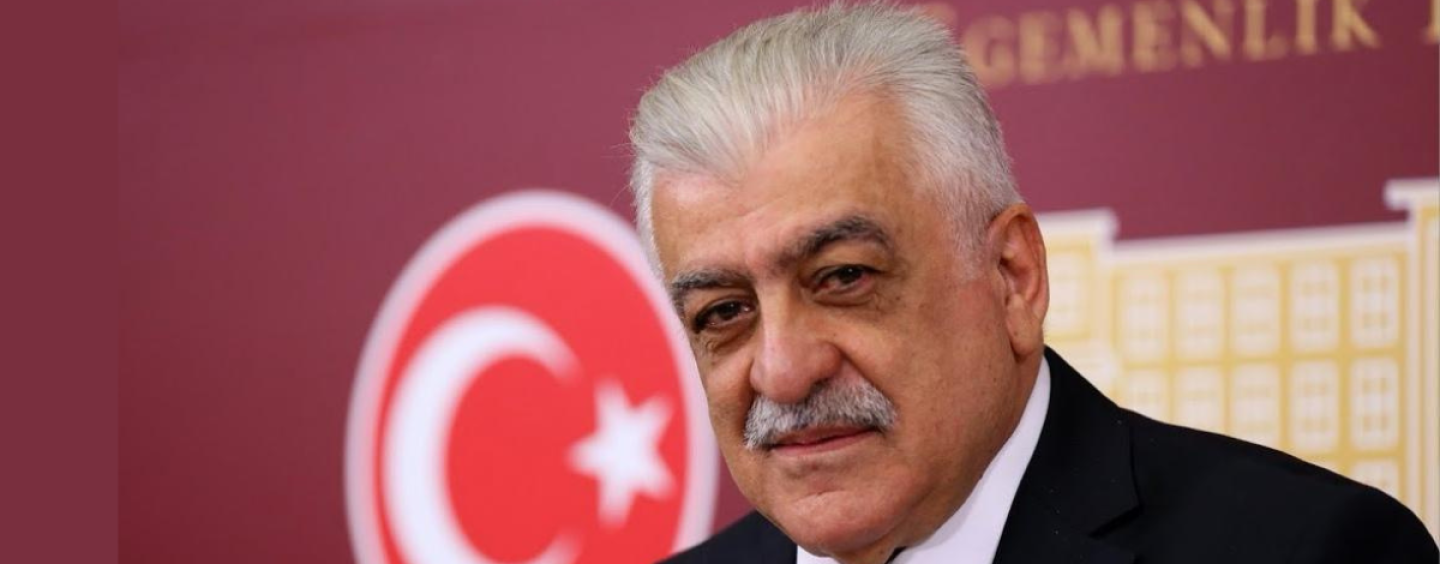
Shamil Ayrım: Türkiye operates not only on the basis of interests but also within the framework of global norms and values.
Questions prepared by Rovshan Pashazadeh.
An Interview with Shamil Ayrım, Member of the Grand National Assembly of Türkiye and Chairman of the Türkiye–Azerbaijan Interparliamentary Friendship Group, for Azerbaijan Today Magazine
A.T.: Mr. Ayrım, as a result of President Erdogan’s forward-looking foreign policy, how do you assess Türkiye’s role as an international power factor in the context of ongoing global political transformations?
Sh. A.: The foreign policy of our President, Mr. Recep Tayyip Erdogan, has made Türkiye a more visible and influential actor on the international stage during a period of accelerating global political change. President Erdoğan’s vision manifests itself both through diplomacy and through practical initiatives on the ground. The phrase voiced at the UN General Assembly —“The world is bigger than five” — is a call to redesign the existing international system in a more just and inclusive manner.
Gaza and Humanitarian Diplomacy
Türkiye’s response to the tragedy unfolding in Gaza reflects President Erdogan’s approach of criticizing the indifference of the international community and becoming a voice for oppressed peoples. In the face of more than 70,000 civilian deaths resulting from Israel’s attacks on Gaza, Türkiye has called for peace and humanitarian assistance on every platform. This approach reinforces Türkiye’s capacity in humanitarian diplomacy.
The Russia–Ukraine War and the Grain Corridor
In the Russia–Ukraine war, Türkiye played a critical role in facilitating the Istanbul-based Grain Corridor Agreement. This initiative:
- Helped ease the global food crisis,
- Positioned Türkiye as an active and reliable actor in crisis management,
- Increased its political and economic influence in vulnerable regions.
Through the slogan “The world is bigger than five,” Türkiye has drawn attention to the need for UN reform, highlighted the injustice of the veto system in the UN Security Council, and advocated for global justice and fair representation for developing countries. This shows that Türkiye operates not only on the basis of interests but also within the framework of global norms and values. By ensuring economic stability, strengthening its defense and diplomatic capacity, and managing international alliances in a balanced manner, Türkiye continues to advance. President Erdogan’s vision has transformed Türkiye into an actor contributing to lasting global peace through both diplomatic engagement and on-the-ground initiatives. This also reveals Türkiye’s potential to become a global power factor beyond its geopolitical position.
Türkiye’s International Power Role
Taken together, these steps demonstrate that President Erdogan’s foreign policy has positioned Türkiye not only as a regional but also as a global actor:
- A balancing power,
- A mediator and functional crisis-management actor,
- A country conducting diplomacy based on international norms, legal frameworks, and ethical values.
Through the slogan “The world is bigger than five,” Türkiye has drawn attention to the need for UN reform, highlighted the injustice of the veto system in the UN Security Council, and advocated for global justice and fair representation for developing countries. This shows that Türkiye operates not only on the basis of interests but also within the framework of global norms and values. By ensuring economic stability, strengthening its defense and diplomatic capacity, and managing international alliances in a balanced manner, Türkiye continues to advance. President Erdogan’s vision has transformed Türkiye into an actor contributing to lasting global peace through both diplomatic engagement and on-the-ground initiatives. This also reveals Türkiye’s potential to become a global power factor beyond its geopolitical position.
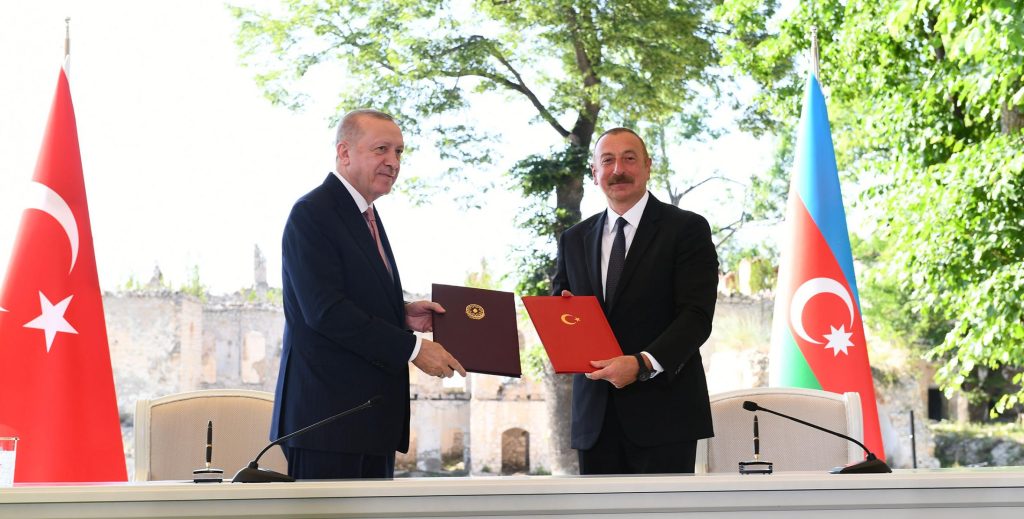
A.T.: In 1991, Türkiye became the first country to recognize Azerbaijan’s independence. The 44-day Second Karabakh War once again demonstrated the friendly and fraternal relations between the two states. The Shusha Declaration signed in the field of defense and security can be considered one of the most important events in the history of the Republic of Azerbaijan. What are your thoughts on the future prospects of cooperation?
Sh. A: Türkiye’s recognition of Azerbaijan’s independence in 1991 laid the strategic and emotional foundation of relations between the two states. The concept of “One nation, two states” has not remained merely a slogan; it has been strengthened through concrete cooperation in political, military, and economic fields. During the 44-day Second Karabakh War, Türkiye’s support was one of the clearest manifestations of the brotherhood and solidarity between the two countries. This process demonstrated how shared history, culture, and language can create powerful synergy when combined with strategic partnership.
The Shusha Declaration in the field of defense and security elevated relations to the level of alliance. The document encompasses not only military cooperation but also foreign policy coordination, regional security, and mutual support mechanisms. In this regard, it can be considered one of the most significant diplomatic achievements in the history of the Republic of Azerbaijan.
Looking ahead, Türkiye–Azerbaijan cooperation is expected to deepen further, particularly in defense industry, energy security, transport corridors (the Middle Corridor and the Zangezur route), expanding trade volume, and joint industrial investments.
In addition, expanding cooperation in education, technology, digital transformation, and youth projects will further strengthen ties between the two countries. Considering regional and global developments, coordinated action by Türkiye and Azerbaijan will contribute both to stability in the South Caucasus and to stronger integration of the Turkic world.
In conclusion, Türkiye–Azerbaijan relations continue to advance confidently toward the future, drawing strength from the past. The strongest expectation is that this cooperation — based on strategic partnership, mutual trust, and brotherhood — will become more comprehensive, institutionalized, and effective in the years ahead.
A.T.: Azerbaijan and Türkiye have stood by each other in both joyful and difficult times. At the instruction of President Ilham Aliyev, the “Azerbaijan” residential district built in Türkiye stands as a tangible example of friendship and brotherhood. Could you share your thoughts on this example of solidarity?
Sh. A.: Azerbaijan and Türkiye are two brotherly countries that have stood by one another throughout history in both good and difficult times. This brotherhood has been demonstrated not only through words but also through concrete acts of support. In recent years, Azerbaijan was among the first countries to send assistance during major forest fires in Türkiye and particularly following the February 6 earthquakes. Search-and-rescue teams, medical personnel, and humanitarian aid shared Türkiye’s pain. The “Azerbaijan Quarter” built in Kahramanmaraş by the Azerbaijani government has become a lasting and meaningful symbol of this solidarity. Similarly, during Türkiye’s War of Independence, Azerbaijan provided material and moral support despite its own hardships. Likewise, during the Second Karabakh War, Türkiye stood firmly by Azerbaijan, offering strong political and moral backing. All these developments demonstrate that the concept of “One nation, two states” is not merely a phrase but a powerful bond rooted in mutual trust and brotherhood.
A.T.: In the near future, the implementation of the Zangezur Corridor will create new opportunities for the two brotherly countries and for the region as a whole in terms of global economic projects. Could you name the three most important features of this mega-project?
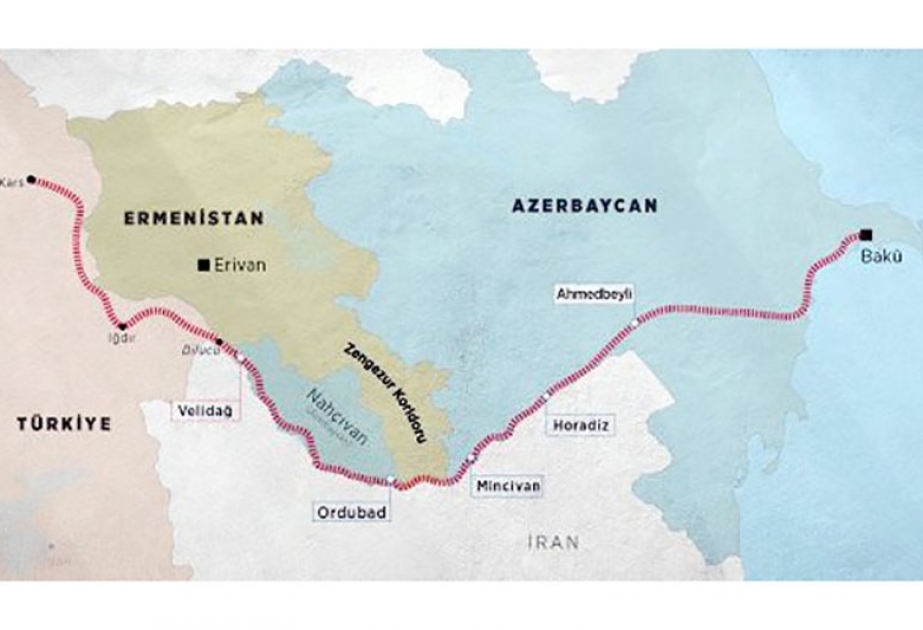
Sh.A.: The Zangezur Corridor promises to increase trade, energy security, and peace in the South Caucasus. Following Azerbaijan’s victory in the 2020 Second Karabakh War and the ceasefire agreement of November 10, 2020, a new chapter began in the region. Article 9 of the agreement introduced the Zangezur Corridor — a strategic transport route connecting mainland Azerbaijan with the Nakhchivan Autonomous Republic via Armenia’s Syunik region. Supported by Türkiye and planned within the framework of strategic alliance with Azerbaijan, this project holds potential not only to transform regional dynamics but also global economic and energy structures.
The year 2025 marked a pivotal turning point for the Zengezur Corridor. On August 8, 2025, a peace framework was signed under the auspices of the United States. In this agreement, which involved Azerbaijani President Ilham Aliyev and Armenian Prime Minister Nikol Pashinyan, alongside President Donald Trump, the development of the corridor was envisioned as the “Trump Road for International Peace and Prosperity.” While the agreement pledges to respect Armenia’s sovereignty, it also grants development rights to the United States.
Three Key Features:
1. Strategic Transport and Trade Route
- Uninterrupted land and railway connection between Azerbaijan and Nakhchivan
- Direct access to Türkiye and Europe
- Strengthened economic integration between the Caucasus and Central Asia
2. Energy Security and Global Economic Impact
- Secure and direct delivery of Azerbaijani oil and gas to Türkiye and Europe
- Alternative and reliable energy route for Europe
- Increased strategic importance of Azerbaijan in global energy markets
3. Regional Peace and Cooperation
- Strengthened diplomatic trust
- Enhanced cooperation among Armenia, Azerbaijan, and Türkiye
- Promotion of stability and prosperity in the South Caucasus
A.T.: During President Erdogan’s visit to Zangilan on October 27, 2021, he emphasized that the Zangezur Corridor could unite the entire Turkic world. In your view, what is the most significant meaning of the corridor?
Sh.A.: In my view, the corridor’s most significant meaning lies in its potential to end geopolitical fragmentation. It represents not only a physical integration route from Türkiye to Central Asia via Nakhchivan and Azerbaijan, but also the transformation of the “Turkic world” vision into a concrete transportation and economic integration project. If successful, it will mark a historic turning point; if unsuccessful, it may generate new tensions.
A.T.: Following the important agreements signed at the trilateral meeting in Washington on August 8, Azerbaijani and Armenian leaders are taking determined steps toward a peace treaty. What changes can be expected in the region as a result of normalization?
Sh.A.: The steps taken after the Washington meeting indicate a normalization process unseen for many years.
Possible changes include:
- Reduced military tensions
- Opening of transport corridors
- Increased foreign investment
- Strengthened economic integration
- A shift from conflict-centered to connectivity-centered regional order
However, constitutional amendments in Armenia and border delimitation remain critical uncertainties. If resolved, the South Caucasus could transform from a conflict zone into a hub of trade and connectivity.
A.T.: In a period when a new world order is taking shape, what challenges does Türkiye face, particularly in the Dasht-i Kipchak region, the Black Sea, and the Eastern Mediterranean, and what steps should Türkiye and its allies take?
Sh.A.: As the balance of power in the new world order shifts from the Atlantic to Eurasia, Türkiye finds itself geopolitically at the intersection of three critical basins: the Dasht-i Kipchak region (the northern Black Sea–Ukrainian steppe axis), the Black Sea, and the Eastern Mediterranean. These three areas represent key nodes of energy, security, transportation, and great-power competition.
Below, I outline both the challenges Türkiye faces and the strategic steps required from Türkiye and its allies.
1. Dasht-i Kipchak (Ukraine–Southern Russia Axis)
Today, this region — effectively shaped by the Russia–Ukraine war — constitutes the northern pillar of Black Sea security.
Challenges
- Risk of escalation in Russia–NATO tensions
- Vulnerability of grain and energy supply security
- Geopolitical pressure on land connectivity with the Turkic world
- Growing hybrid warfare and cyber threats
Necessary Steps
- Balanced diplomacy: maintaining NATO membership commitments while continuing crisis management with Russia
- Institutionalizing grain and logistics corridors on a permanent basis
- Expanding defense industry capacity (UAVs/UCAVs, naval power, air defense systems)
- Strengthening transport and energy integration with Turkic states
If this axis remains unstable, the entire Black Sea region will come under pressure.
2. The Black Sea
The Black Sea is no longer a “secondary front” but one of the central pillars of European security.
Challenges
- Increasing military buildup
- The delicate balance of the Montreux regime
- Security of undersea energy and data cables
- NATO’s growing presence along the Romania–Bulgaria axis
Necessary Steps
- Meticulous preservation of the Montreux Convention regime
- Strengthening national naval capabilities (MİLGEM program, submarine projects, etc.)
- Expanding regional security mechanisms with Black Sea littoral states
- Protecting maritime trade routes against mines and unmanned threats
If Türkiye loses its role as a balancing power, the Black Sea could become a direct arena of great-power confrontation.
3. The Eastern Mediterranean
Energy resources, migration flows, and maritime jurisdiction disputes converge intensely in this region.
Challenges
- Disputes over maritime jurisdiction areas
- Regional tensions following the Israel–Gaza war
- Military balance competition with Greece
- Attempts to exclude Türkiye from energy projects
In particular, maritime jurisdiction disputes with Greece, energy diplomacy with Israel, and maritime agreements with Libya remain critical issues.
Necessary Steps
- Multilateral energy diplomacy
- Increasing the deterrent capacity of naval and air forces
- Controlled normalization with Egypt and Israel
- Expanding frameworks for economic cooperation in the Eastern Mediterranean
Structural Challenges Facing Türkiye
- Energy dependency
- Economic fragility and inflation
- Migration pressure (primarily from Syria)
- Trust deficit in relations with the West
- A necessary yet delicate balance with Russia
What Should Türkiye and Its Allies Do?
1. Multi-layered Foreign Policy
Not a single-axis strategy, but simultaneous engagement with NATO, the EU, the Organization of Turkic States, and the Middle East.
2. Becoming an Energy Hub
Positioning Türkiye as the primary transit country for Caspian, Middle Eastern, and Eastern Mediterranean gas to Europe.
3. Defense and Naval Power
Maintaining two-front deterrence in both the Black Sea and the Mediterranean.
4. Economic Resilience
Without high-tech production and financial stability, geopolitical power cannot be sustainable.
5. Institutionalized Regional Mediation
Formalizing mediation roles in the Ukraine war, Caucasus normalization, and Middle Eastern crises.
Strategic Conclusion
If war in the Dasht-i Kipchak region, military competition in the Black Sea, and energy struggles in the Eastern Mediterranean intensify simultaneously, Türkiye could face “three-front geopolitical pressure.”
However, if managed correctly, Türkiye can emerge as:
- A balancing power in the Black Sea
- A connectivity hub in the Caucasus
- An energy center in the Mediterranean
Türkiye possesses the capacity to achieve this.