
Strategic Goals of Türkiye for South Caucasus And Geopolitical Value of the Middle Corridor
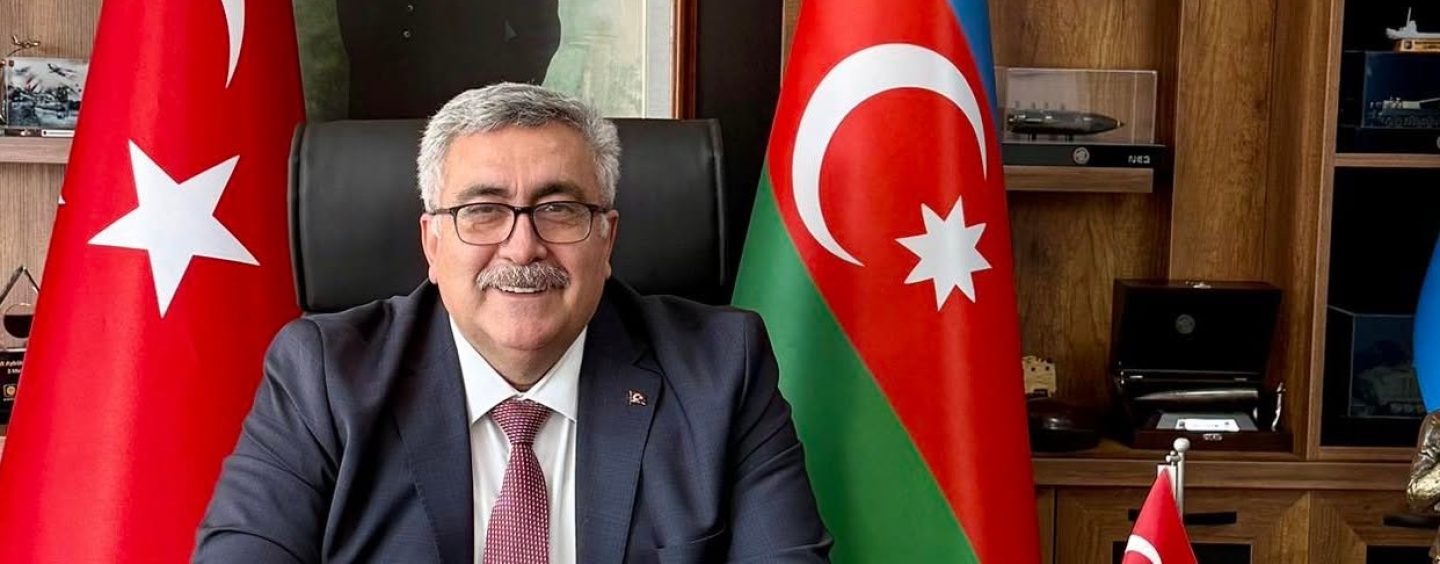
By Yujel Karauz, Turkish Military Attaché to Azerbaijan (during 2011/13)
In recent years, the South Caucasus has emerged as one of the world’s most strategically significant geopolitical regions. Russia’s war against Ukraine, persistent instability in the Middle East, the European Union’s pursuit of energy security, and the reconfiguration of trade routes between China and Europe have further enhanced the region’s strategic importance. Against this backdrop, Türkiye regards the South Caucasus not merely as a neighbouring region but as a strategic bridge connecting Europe, Central Asia, and the Turkic world.
One of Ankara’s principal objectives is to promote lasting peace and stability throughout the region. Türkiye maintains that sustainable economic development and regional cooperation can flourish only in an environment of enduring peace. Accordingly, the conclusion of a comprehensive peace agreement between Azerbaijan and Armenia, the reopening of regional transport and communication links, and the establishment of effective mechanisms for regional cooperation remain among the foremost priorities of Turkish foreign policy.
A second strategic objective is to further strengthen the allied partnership with Azerbaijan. The principle of “One Nation, Two States” has evolved beyond a political slogan into a comprehensive framework for strategic cooperation encompassing defence, security, energy, logistics, and economic development. This partnership also contributes significantly to the emergence of a new regional security architecture in the South Caucasus.
Another important objective is to advance the physical and economic integration of the Turkic world. Türkiye views its relations with the Central Asian states not solely through the prism of diplomacy but also as part of a broader effort to establish an integrated platform for cooperation in transport, energy, trade, digital infrastructure, and the defence industry. Within this vision, the South Caucasus serves as an indispensable geopolitical corridor linking Türkiye with Central Asia.
At the heart of this strategy lies the Middle Corridor. Extending along the China–Central Asia–Caspian Sea–Azerbaijan–Georgia–Türkiye–Europe route, the Middle Corridor is far more than an alternative transport corridor; it constitutes one of the cornerstones of the emerging geo-economic order across Eurasia.
Importance of the Middle Corridor is obvious in several areas.
First, the Middle Corridor contributes to the diversification and resilience of global supply chains. As the Northern Corridor through Russia has become increasingly constrained by geopolitical tensions, while southern routes continue to face significant security challenges, the Middle Corridor has emerged as a more secure, reliable, and strategically viable alternative.
Second, it reinforces Türkiye’s position as a major logistics hub connecting Europe and Asia. Continued investment in ports, railways, motorways, and logistics centres substantially enhances Ankara’s role as a regional transport and transit hub.
Third, the Middle Corridor plays an increasingly important role in strengthening European energy security. The transportation of Azerbaijani natural gas—and, in the future, potentially Central Asian energy resources—to European markets could further consolidate Türkiye’s position as a regional energy hub, thereby enhancing both its economic influence and geopolitical standing.
Fourth, the corridor accelerates economic integration among the Turkic states. Expanding trade volumes, streamlined customs procedures, the implementation of digital logistics systems, and reduced transport costs collectively enhance the economic competitiveness and connectivity of the Turkic world.
At the same time, the project’s long-term success depends upon overcoming several significant challenges. Persistent political tensions, strategic competition among major powers, incomplete transport connectivity, and technical bottlenecks along certain sections of the route may impede the pace of the Middle Corridor’s development.
For this reason, Türkiye places equal emphasis on diplomatic engagement, regional dialogue, and multilateral cooperation alongside infrastructure development. Ankara recognises that sustainable connectivity requires not only modern transport networks but also political stability, mutual trust, and robust institutional cooperation among the countries of the region.
In conclusion, Türkiye’s policy towards the South Caucasus extends far beyond traditional military and security considerations. Ankara regards the region as a strategic platform for strengthening energy security, expanding international trade, enhancing transport connectivity, advancing digital infrastructure, and deepening the integration of the Turkic world. The successful development of the Middle Corridor will reinforce Türkiye’s geopolitical and geo-economic influence not only within the South Caucasus but across the wider Eurasian region. At the same time, it has the potential to transform the South Caucasus into a region characterised by stability, cooperation, economic integration, and shared prosperity.


