
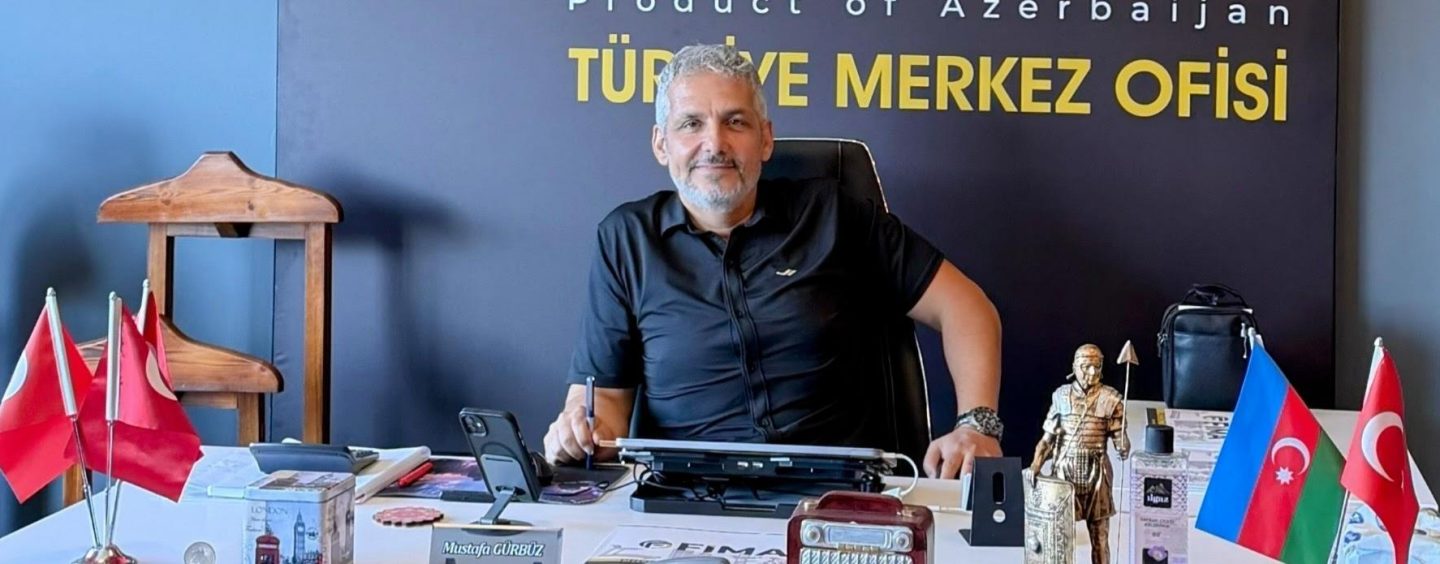
By Mustafa Gurbuz, Journalist.
The 36th NATO Summit of Heads of State and Government, held in Ankara and watched closely around the world, highlighted not only the revision of the security doctrines of NATO member states—particularly in Europe—but also the growing influence of Türkiye in global politics.
The summit can best be examined under several key headings.
The first is the positive atmosphere created in Türkiye–U.S. relations by the personal dialogue between President Recep Tayyip Erdoğan and U.S. President Donald Trump, whose visit marked the first by an American president to Türkiye in 17 years.
Although the tone of the meeting was constructive, its significance lay primarily in the fact that it brought long-standing issues in defence, energy, trade, and regional security back onto the agenda through high-level political engagement. Rather than indicating that all outstanding disputes had been resolved, the announced outcomes suggested that both sides were committed to keeping negotiations active on several key issues.
Defence Industry and the F-35/F-16 Issue
One of the most critical topics discussed was Türkiye’s potential return to the F-35 programme, the procurement of F-16 fighter jets, and the future of the CAATSA sanctions.
Judging by the recent criticism voiced by the Israeli government and the Greek media, Türkiye’s negotiating position appears to have strengthened considerably. Any positive signals from Washington regarding the lifting of sanctions or the resumption of defence sales would represent a significant diplomatic achievement for Ankara.
Although this issue remains highly sensitive due to congressional dynamics, the S-400 dispute, and persistent anti-Türkiye sentiment within certain circles of U.S. politics, even prominent senators such as Lindsey Graham have begun to soften their rhetoric. This shift suggests that Washington’s overall perception of Türkiye is evolving.
Energy and Trade
The emphasis on energy cooperation and large-scale commercial agreements following the meeting indicates that both countries are seeking to redefine their relationship beyond the traditional security framework by strengthening economic interdependence.
For Türkiye, progress in energy cooperation, civil nuclear projects, and the aviation sector could help reduce its dependence on Russian energy while improving access to Western investment and financing.
Regional Issues: Syria, Gaza, and Ukraine
In Syria, tensions persist between the United States’ policy towards the Syrian Democratic Forces (SDF/YPG) and Türkiye’s national security priorities. Nevertheless, the leaders’ meeting suggests that diplomatic engagement may intensify regarding new security arrangements and political integration processes in Syria.
On Gaza, Türkiye seeks to play a more visible role in addressing the humanitarian crisis and promoting a ceasefire, while the United States may seek to benefit from Türkiye’s growing regional influence.
Regarding Ukraine, Ankara’s balanced diplomatic approach and mediation efforts continue to represent a pragmatic asset from Washington’s perspective.
Leadership Diplomacy and Political Messaging
Perhaps the most notable outcome of the meeting was the renewed strengthening of the personal diplomatic channel between President Erdoğan and President Trump.
While criticising NATO’s approach towards Iran and the policies of several Western leaders, Trump made a point of distinguishing Erdoğan from the rest, memorably remarking, “If he hadn’t invited me, I wouldn’t have come.” This statement became one of the summit’s defining messages.
Such personal diplomacy may facilitate crisis management in the short term. However, unless supported by strong institutional mechanisms, bilateral relations risk becoming overly dependent on the political priorities—or even the political longevity—of individual leaders. Whether this meeting produces lasting results will therefore depend on the ability of technical teams to develop concrete implementation plans and timelines.
Türkiye Emerges Stronger Regardless
The Trump–Erdoğan meeting should be viewed as a diplomatic engagement with the potential to open a new chapter in Türkiye–U.S. relations, even if it has not yet produced definitive outcomes.
In the short term, the positive atmosphere could accelerate technical negotiations in the fields of defence and energy. Over the medium term, however, the true direction of the relationship will be determined by tangible progress on issues such as the lifting of CAATSA sanctions, the F-35 and F-16 programmes, security coordination in Syria, and diplomatic efforts concerning Gaza.
Regardless of these uncertainties, hosting this historic NATO summit and facilitating the high-profile meeting between Trump and Erdoğan have further reinforced Türkiye’s rising international stature. They demonstrated to both allies and rivals alike that Türkiye is becoming one of the indispensable actors in the emerging global order.
This growing prominence is attributable not only to Türkiye’s possession of one of NATO’s largest and most capable armed forces, but also to the remarkable advances its defence industry has achieved in recent years.
It was therefore no coincidence that nearly every leader attending the summit praised Türkiye’s national defence industry, its next-generation military technologies, and the professionalism of the Turkish Armed Forces.


